
 Back to all articles
When is the right time to think about online safety?
10 April 2026
Parenting in the digital world can feel overwhelming especially when devices appear earlier and earlier in our children’s lives. Whether your tamariki are watching cartoons, gaming with friends, getting their first phone, or exploring social media, it can be hard to know when to start planning your family’s online safety approach. The good news is: if you’re thinking about it now, you’re right on time! Digital safety isn’t about rules first. It’s about relationship, connection, and growing together as your child explores the online world.
It's never too early, or too late
If it hasn’t been on your radar before, don’t worry! Now is the right time
Many parents don’t start thinking about online safety until something tricky happens, like a heated gaming chat, online messaging issues among peers, or rangatahi suddenly hiding phones and being secretive.
If that’s you, that's OK. Every whānau starts the journey at a different point.
You can start today and it can be as simple as asking curious questions, like what they like to do online, who they like to follow, or what the latest content trends are for their generation.
Learning alongside your child and focusing on connection rather than control is known to be a really powerful way to build trust as you open safety conversations with rangatahi, and these small foundations set the stage for healthy habits later on.
Start small and focus on connection over perfection
You don’t need a full set of rules or to have technical knowledge of every single device or app.
Start with:
Curiosity which might sound like asking “Show me what you like about this game”
Presence which might look like co-viewing when possible and using tech in shared spaces at home
Gentle reassurance which might sound like “if anything feels weird online, you can come and tell me”
Connection lays the groundwork for trust...and trust, rather then surveillance, is what keeps our tamariki safe online.
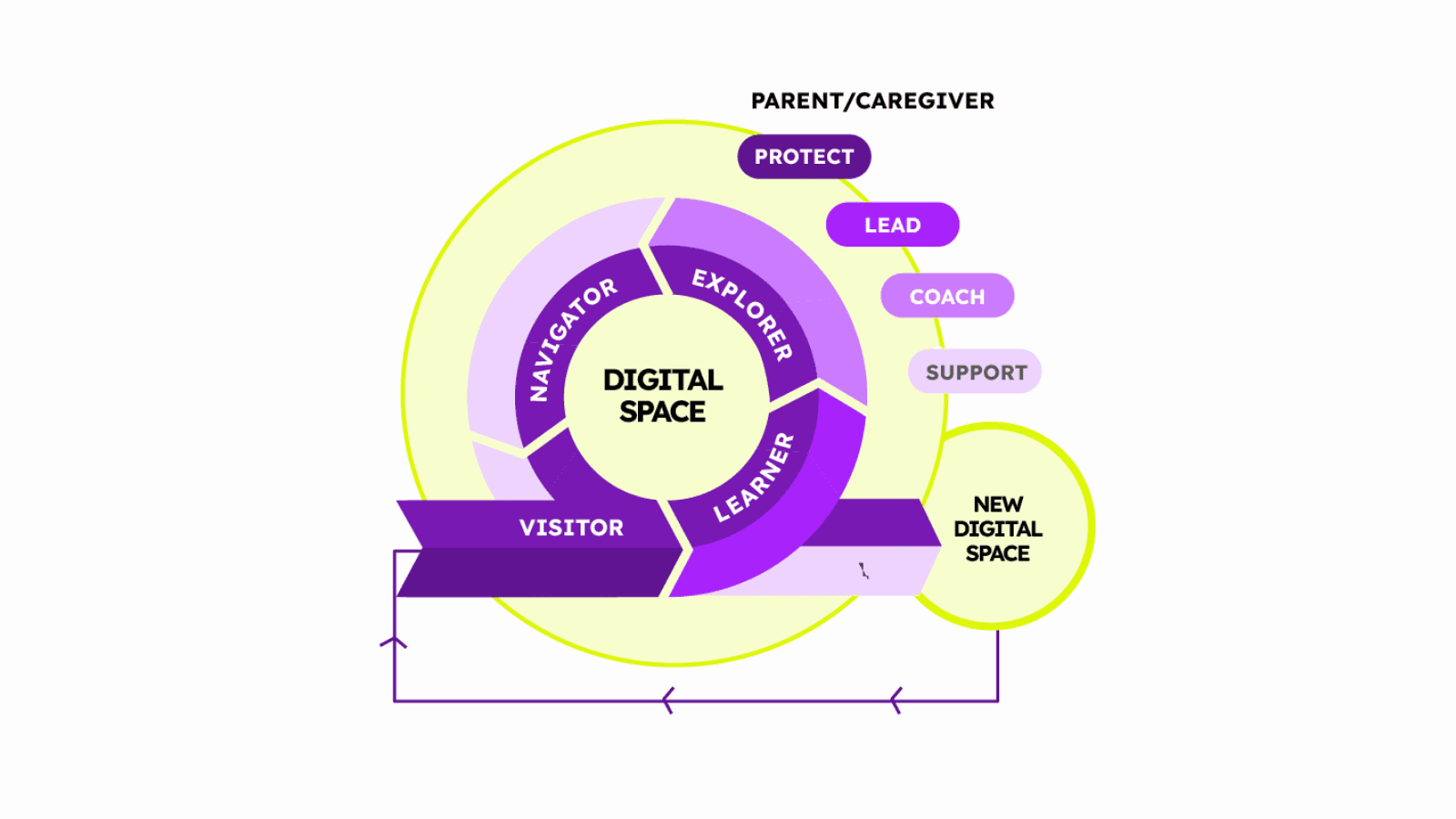
Consider where your child or young person is at.
If you tamariki is just being introduced to online devices for the first time, or starting to explore a new online space, then we can consider them Visitors. Your approach here may be mostly focused on protection through short, supervised online sessions, and setting up access to safe content by using parental controls. You'll be building healthy and balanced digital routines and simple habits.
As tamariki become more used to visiting online spaces they develop into Learners. They may be more curious about what else they can 'do' with a device and want more autonomy. They're also learning from everything and everyone around them, about how devices and online tech plays a role in their world, and your focus here is to lead them safely and role model good habits.
If your tamariki and rangatahi are starting to use devices and online spaces with less supervision, and they're finding new spaces to connect and play in, then we could consider them Explorers. A way to meet them where they're at is to play the role of a coach, helping them to navigate independently and safely, as they join new spaces online. This is where kōrero, reflection, and shared problem-solving plays a crucial role in supporting them to be safe online.
If your rangatahi is connecting, creating, collaborating and engaging in online spaces independently then we could consider them a Navigator. Your role here is as a trusted advisor, to support them when they need it, and help them think critically and manage their oneline independence. After all, even the best pilots needs a co-pilot and ground crew.
Tamariki may be a Visitor in one space and an Explorer in another and that’s totally normal.
Be guided by their level of online exposure and experience, not just age, to find the right stage - and meet them where they are.
Step in gently to protect connection and trust
Parents often worry that “checking in” will feel like “checking up on.” The key is how you approach it. Warmth, calm and curiosity keep the door open for conversations, and small, regular check ins help to normalise the conversation, and create a habit of talking about life online.
It tends to be best to avoid surprise phone checks, lecturing or shaming, or reacting with panic. A fear of losing access to their social connections when devices are confiscated can lead to children unfortunately not confiding early when something is worrying them.
Try some simple conversation starters to open the door
- “Can you show me how this works?”
- “Who do you usually play with here?”
- “What do you like about this creator?”
- “Anything ever pop up that feels a bit off?”
What else can help?
- Sit alongside children when you can and show interest in what they're doing. Even five minutes can build connection that can lead to more open conversations
- Ask open questions about what they like, dislike, and notice online
- Share your own digital experiences or mistakes to normalise learning
- Embed simple habits like Stop–Ask–Tell, Pause–Check–Tell, or Pause–Think–Talk depending on their digital stage
- Name your family values and tsalk about how they apply online and offline
- Keep kōrero light, frequent, and non-judgmental
First step today
Find a moment today to check in about life online. If your tamariki is in the Visitor or Learner phase this may be sitting alongside while they watch something and asking what they like about it.
If your rangatahi is gaming or on socials then it may be asking a curious and genuine question about what's happening in the game or in the chat.
Remember - you don’t need to be a tech expert to be a great digital guardian, you just need to stay connected and curious.
As your tamariki grow, their online world will grow with them. You’ll move through the different phases of Protect → Lead → Coach → Support many times, back and forth - as new online experiences are introduced.
You can find more detailed information about each of these phases in the Digital Guardian Guides :