
Support: Staying Available As Digital Independence Increases

Digital independence grows with time, guidance, patience and practice. Children and their caregivers move back and forth between protecting, leading, coaching and supporting - depending on the platform, the challenge, and confidence and experience levels.
Support
Keep reading to explore what digital guardianship could look like as your rangatahi move to digital independence, and how you can maintain connection by providing compassionate support.

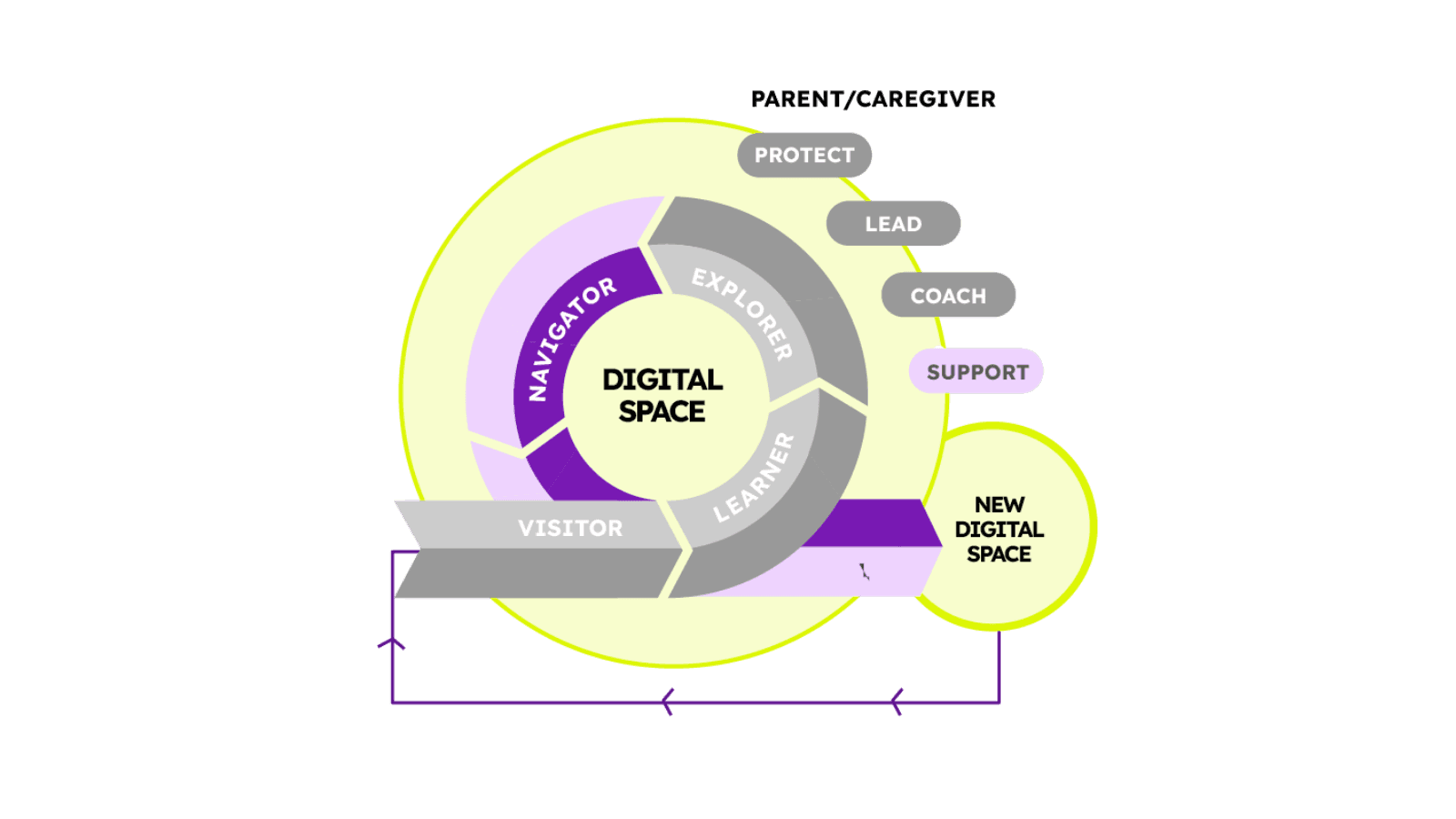
As your child's online experiences evolve, so too does your approach to protecting and supporting them.
Where are you?
Guardian: You are a supporter and trusted advisor, empowering your young person to maintain their wellbeing, reputation and safety in online spaces.
Rangatahi: Your young person is a navigator, shaping their digital world and how they show up in it.
Your rangatahi may be independently navigating, creating, connecting, and leading in online spaces, taking an active role in shaping their online world and developing their own voice to connect, engage and express themselves. At this stage, your role shifts from coaching to supporting.
You’re a trusted sounding board, helping them think through decisions, manage risks and respond if something goes wrong. The curiosity and open kōrero you’ve built over time deepens and your young person trusts that they can talk with you about their digital world and know you’ll listen with interest, not judgement.
Your role isn’t to direct or monitor, it’s to support, reflect, and stay available. You’re walking beside them as they navigate adult digital experiences such as relationships, privacy, wellbeing, and reputation.
Curiosity and kōrero aren’t new, they’re habits you’ve built together, and along with trust, empathy and shared values they are your strongest safety tools.
CORE HABIT
Reflect, Decide, Act
This habit builds on the habits you’ve built together in earlier levels, and helps rangatahi take ownership of their digital footprint and the impact of their actions. It’s about maturity, empathy, and self-awareness.
How to explain it:
“Before you post, share, comment, or get involved online…”
Reflect how might this affect me or someone else? Consider if it fits who you want to be?
Decide if it's the right action? Consider if you need more information or support?
Act and follow through with kindness and confidence. If things go wrong, respond safely by screenshotting, muting, blocking, deleting, reporting, and asking for help
Top tips for parents:
- Talk openly about potential consequences (both positive and negative) of making different decisions online (posting comments, sharing photos or videos etc.)
- Encourage reflection on past decisions and talk about whether they would make the same decisions today - any why or why not
- Step back gradually, showing trust while staying available to step in and support when needed
What to know
Common online experiences include using multiple social media and messaging platforms, creating and sharing original content, gaming (possibly live streaming and chatting with other players), engaging with online communities, consuming media (such as podcasts, livestreams influencer reels, news platforms) and exploring identity and values.
Opportunities:
- Building identity and confidence by sharing ideas, interests, and achievements through posts, videos, art, and stories that reflect who they are and what they care about
- Developing design, media, and communication skills that can translate into study, advocacy, or career pathways
- Demonstrating leadership skills by running online projects, mentoring younger peers, or advocating for positive change
- Learning and skill-building by accessing tutorials, courses, and global resources that support schoolwork, hobbies, or future goals
- Developing empathy and social awareness by engaging with global issues and diverse perspectives, learning to debate respectfully and think critically
Risks and challenges:
- Managing effects of social media across platforms (e.g. like anxiety, comments, body image, comparison culture)
- Cyberbullying and online harassment, including harmful comments or targeted exclusion
- Unwanted contact - sometimes from peers, sometimes from strangers, possibly leading to catphishing, grooming or sextortion
- Impacts to future reputation and digital footprint from misjudged posts, private content being shared, or traces of past activity affecting study or job opportunities
- Exposure to harmful content (violence, self-harm, pornography, or extremist ideas) that can distort understanding or desensitise young people
- Misinformation and manipulation via influencer marketing, deepfakes, political bias, and echo chambers shaping their views and values
- Oversharing personal information, security risks from weak passwords, or falling for scams and phishing attempts
- Wellbeing risks from a lack of digital balance, fear of missing out, or anxiety / burnout from constant notifications and digital overload
- Legal and ethical challenges about understanding consent, copyright, and the consequences of sharing explicit or offensive content
You’re ongoing support, curiosity and compassion continue to be your young person's strongest safety net
Ways to engage
- Stay curious
- Use the kōrero cards in this toolkit to keep the conversation going, little and often. Small, regular chats are more powerful that one big talk and will help you stay up to date with what's happening in your young person's online life
- Check your digital footprints
- Do a regular online footprint review together by searching yourself, each other and other members of the whānau. What does your footprint say about you? Review old posts, reflect on the footprint, and tighten settings where needed
- Share views and opinions
- Discuss real‑world stories in the news about misinformation, AI‑generated fakes, and algorithm influence to learn from each other about life online
- Reflect on wellbeing
- Use our Online Reflection Quiz and Online Wellbeing Wheel to check in on whether online spaces are uplifting or depleting
- Offer logistical support
- Check in and share how and where to get help (screenshotting evidence, muting and blocking, reporting to platforms or contacting Netsafe)
Involve the whānau
Digital parenting works best when expectations are consistent across homes and generations.
Siblings
Encourage older rangatahi to mentor younger tamariki in online safety and kindness
Grandparents / extended whānau
Encourage rangatahi to coach their whānau on digital safety and staying connected online to build skills
School and community whānau
Stay connected to how online safety and digital citizenship is being taught at school, and what their policies are for online incidents. Connect with deans, counsellors, and coaches or youth leaders when leadership or support is needed

Top 5 Tips
1. Plan how you'll respond if something happens online
If your young person shares something worrying, try to stay calm, be curious and focus on listening more than talking. This builds trust and makes it more likely they’ll come to you again.
Normalise help-seeking by regularly talking about when and how to get help. Discuss real scenarios that you might read about in the news, and hypothetical scenarios (“what would you do if...”) to position help-seeking as a natural response.
2. Stay connected through regular kōrero
Even as independence grows, regular check-ins matter. Keep conversations light and open, and share what you’re learning online too. Ask what they’re proud of online, what feels heavy or what’s inspiring them, to reinforce that digital life is something to be talked about, not hidden.
3. Tune into digital balance and wellbeing
As online use inevitably increases, encourage your rangatahi to notice when being online feels uplifting (connecting with friends, creating something, or learning) and when it starts to feel heavy, pressured, or draining.
Work together to find what a healthy digital balance looks like for them and what strategies they might use for re-setting and restoring the balance when they need to.
Your rangatahi still values shared offline time, even if they don’t always ask for it. Keep planning and inviting them to whānau activities that strengthen connection away from screens; this models healthy balance and shows them they matter beyond their digital lives
4. Normalise help-seeking
x
5. x
x
Every conversation with your rangatahi about life online is another chance to show them that you’re on their team
What's next?
From here, your rangatahi will likely become increasingly self-managing. Your ongoing role is to stay available, stay curious, and stay proud.
Digital independence isn’t the end of the journey, it’s a new stage of partnership.
Your relationship is still their most important online safety tool.

Signs your rangatahi might be ready for the next stage
These indicators aren’t milestones - they’re patterns of readiness. Children move forward and back depending on the app, their confidence, and what’s happening in life. Use these signs as conversation prompts, not assessments - to guide where your whānau puts focus next.
- They maintain balanced online/offline routines without constant reminders
- They notice their own wellbeing signals, for example when digital life feels draining or rewarding
- They use help-seeking behaviours when things go wrong (they come to you, a teacher, or a friend)
- They manage their digital reputation thoughtfully, checking what they post and why
- They’re mentoring and supporting others (siblings, friends, or classmates) and modelling safe, kind digital citizenship
If these indicators begin to slip it’s OK to loop back to the Coach or Lead approaches temporarily.
Each phase of your digital guardian journey (Protect, Lead, Coach, Support) is connected. Caregivers and whānau will move between stages often depending on context, confidence, and new experiences.
What matters most isn’t which level you’re in, but how you stay connected, curious, and kind along the way.
Contact Netsafe
If you or a child in your care experiences online harm or needs advice, Netsafe is here to help.
Contact us for free, confidential, and non-judgmental advice and support.