
Protect: Prioritising Safety When Your Child Is Visiting New Online Spaces

Digital independence grows with time, guidance, patience and practice. Children and their caregivers move back and forth between protecting, leading, coaching and supporting - depending on the platform, the challenge, and confidence and experience levels.
Protect
Keep reading to explore what digital guardianship could look like when tamariki are starting to visit online spaces for the first time, or are visiting new apps and platforms as they grow.

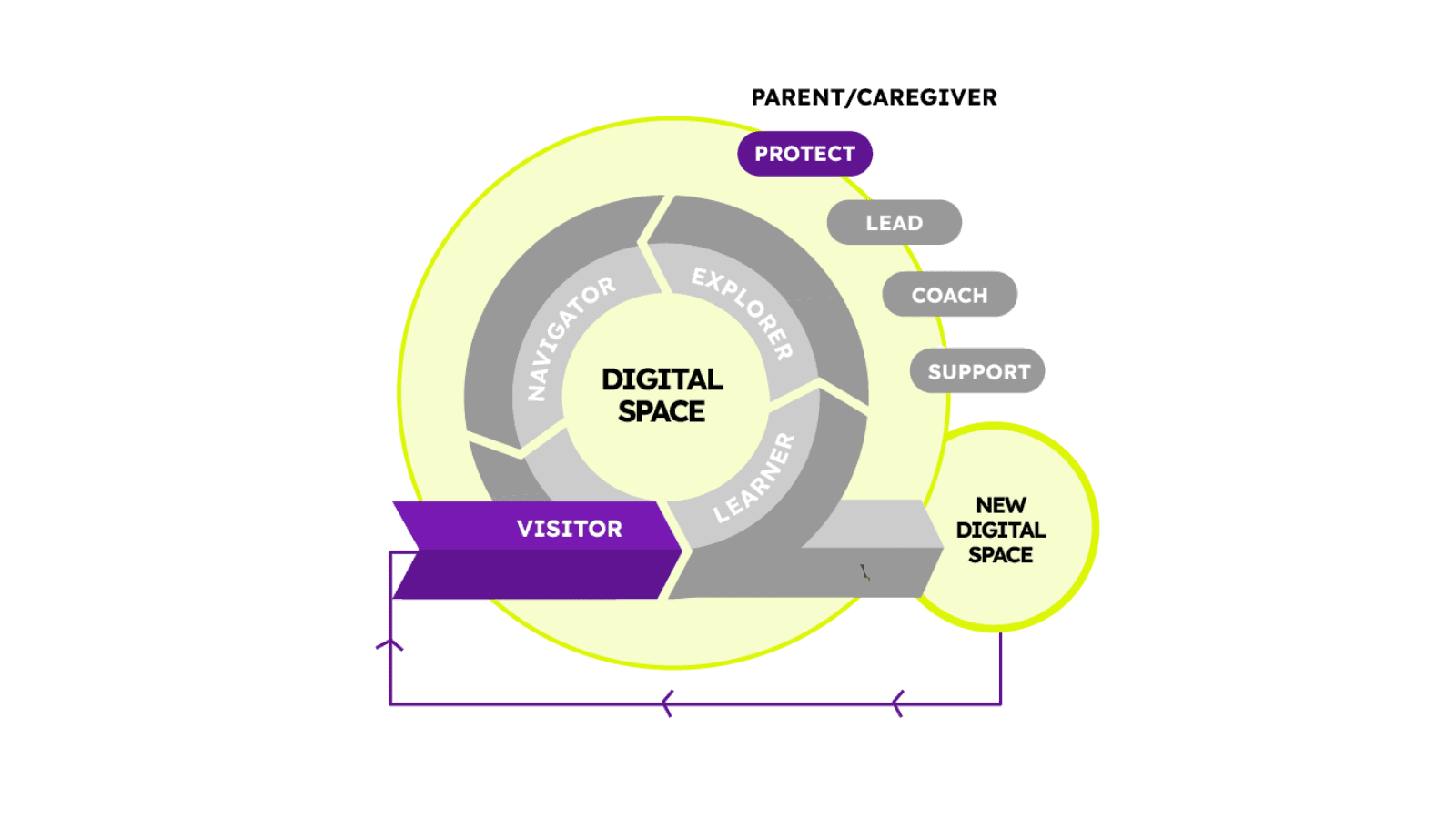
As your child's online experiences evolve, so too does your approach to protecting and supporting them.
Where are you?
Guardian: You are a guide and protector, helping your child to safely visit online spaces. Focus on building foundational habits, choosing safe content, setting up protections and controls, and creating shared digital routines.
Tamariki: Your tamariki is a visitor online, discovering this space for the first time, with your help and guidance
Your child might be taking their first steps into the digital world, or getting started in a new app, platform or online space. They’re visiting carefully chosen apps, videos, and games, mostly under your guidance. Your role is to help choose safe content and review parental controls and safety settings to support safe exploration.
Digital guardianship at this level is about connection – it’s never too early to start talking about being safe online, and it’s important to keep talking about it as new apps and platforms are introduced and used.
When you can, sit alongside and watch or play together; be curious about what they’re watching and ask questions (“what do you like about this video?”) to connect with each other, and with the content.
Combining parental controls, device settings and early conversations create a strong foundation for safe and positive first experiences that build confidence, curiosity, and trust.
CORE HABIT
Stop, Ask, Tell
This simple mantra helps young children build safe digital habits before they can read or follow complex instructions. This mantra is especially helpful in those moments when you can’t sit alongside to watch or play together.
How to explain it:
“If something new pops up on your screen - a picture, sound, or button you don’t know…”
Stop tapping the screen and take a breath.
Ask an adult what it is.
Tell us how it made you feel, or if you didn’t like it.
Top tips for whānau:
- Practice with role-play scenarios (“What would you do if this message popped up?”)
- Celebrate when children do stop and ask, reinforcing positive behaviour
- Display the mantra somewhere visible near devices
What to know
Common online experiences at this level include streaming videos, playing games, video calls with whānau, and listening to music or stories via apps.
Opportunities:
- Strengthen language and creativity through high-quality apps
- Build early tech confidence and digital literacy
- Foster connection and shared joy through co-viewing, co-playing, stories, music, and laughter
Risks and challenges:
- Autoplay leading to unsuitable content
- Managing screen time balance
- In-app ads, pop-ups or accidental taps and purchases
- Over-reliance on screens for soothing or distraction
- Parent guilt or overwhelm when time online feels “too much"
Remember this...
You don't have to get it perfect. Focus on staying curious and connected, not controlling every click.
Ways to engage
- Sit alongside when you can
- You don't need to co-view every time, but showing interest and asking questions about what they're watching or playing online matters.
- Narrate safe habits aloud
- For example "I’m turning off autoplay so we don’t get videos we haven’t chosen"
- Read the Hector's World digital storybooks
- Use these resources with younger tamariki to talk about online choices
- Watch Hector's World together
- Animated episodes and parent guides to introduce online safety to under 10's
- Build a Thumbs Up / Thumbs Down plan
- Create online boundaries and shared expectations with this foundational resource, suitable for younger tamariki
- Recognise good choices and respect for boundaries
- Use the Visitors Badges and Fridge Poster to engage tamariki with learning about device safety
Involve the whānau
Digital parenting works best when expectations are consistent across homes and generations.
Siblings
Involve older tamariki in co-viewing or the Thumbs Up activity to align expectations.
Grandparents / extended whānau
Share what’s OK to watch and when, and match control settings if devices are shared across homes. Invite the wider whānau into the conversation about what’s okay online, so expectations are consistent and culturally aligned.
Early learning centres
Ask about how devices are used there, so you can reinforce the same habits at home.
Solo or busy caregivers
Try not to feel overwhelmed - even small, consistent chats make a big difference, and are a great place to start.

Top 5 Tips
1. Guide safe exploration
Choose high-quality apps and where possible, watch and play together or check-in regularly to stay connected with the content and your child’s online experience.
2. Use built-in tools
Create child profiles, turn off autoplay, block adult content, use timers or focus tools, and consider paid versions of apps to reduce ad exposure (if possible).
3. Model healthy tech use
The way you use technology sends powerful signals about what is “normal” and acceptable. Children learn as much from how we put our phones down, as from what we say about screentime - so let them see you enjoying offline activities as much as online ones.
4. Set boundaries and routine
Agree on simple house rules like keeping devices in shared spaces and setting screentime and screen use expectations. The quality, context and co-use of screentime matter just as much as the duration so think about what your child is doing or watching online as well as for how long. Aim for short, age-appropriate sessions and avoid screens close to bedtime and mealtimes to support healthy sleep and family connection.
5. Keep kōrero going
Make digital life something you talk about naturally – it’s never too early to build connection and reinforce your family’s values (for example kindness, sharing, respect) in an online context as well as an offline one. For our tamariki today there is no distinction between online and offline worlds – they are one and the same.
“Technology changes fast - and you’re not expected to know it all. You don’t need to be a tech expert to keep your whānau safe online. Staying curious and connected is what matters most.”
What's next?
As your child grows more confident, they’ll start wanting to explore on their own - choosing shows, games, or learning tools.
That’s your cue to consider how you lead and role-model the behaviours and habits you want to see, and consider involving your child and deciding together what’s OK and what’s not.
Involving them in decisions and expectation setting is an important step in helping them start making safe choices for themselves.

Signs your child might be ready for the next stage
These indicators aren’t milestones - they’re patterns of readiness. Children move forward and back depending on the app, their confidence, and what’s happening in life. Use these signs as conversation prompts, not assessments - to guide where your whānau puts focus next.
- They show basic self-control: can pause when asked, follow simple screen rules without meltdown
- They begin to show curiosity, for example “Can I watch this?” or “Why did that come up?”
- They use Stop, Ask, Tell naturally, stopping to check in when something looks new or odd
- They remember and repeat digital routines (for example, devices off at dinner, no autoplay)
- They show pride in making good choices online (telling you when they clicked away from something strange)
- They start to ask for independent time (want to watch/play alone for short periods)
When these behaviours appear consistently, it’s time to start co-deciding content and routines - moving into the next phase of digital guardianship - the Lead phase.
You may still return to this Protect phase when new online spaces are introduced.
Digital parenting is fluid and isn’t a race - it’s a rhythm. You’ll move between protecting, leading, coaching, and supporting many times as your child grows up online.
What anchors you both is connection, curiosity, and conversation.
Contact Netsafe
If you or a child in your care experiences online harm or needs advice, Netsafe is here to help.
Contact us for free, confidential, and non-judgmental advice and support.