
Coach: Supporting Safety And Wellbeing As Children Explore Online

Digital independence grows with time, guidance, patience and practice. Children and their caregivers move back and forth between protecting, leading, coaching and supporting - depending on the platform, the challenge, and confidence and experience levels.
Coach
Keep reading to explore what digital guardianship could look like as your rangatahi explores online spaces and platforms with more independence, and how you can stay connected as their digital world grows.

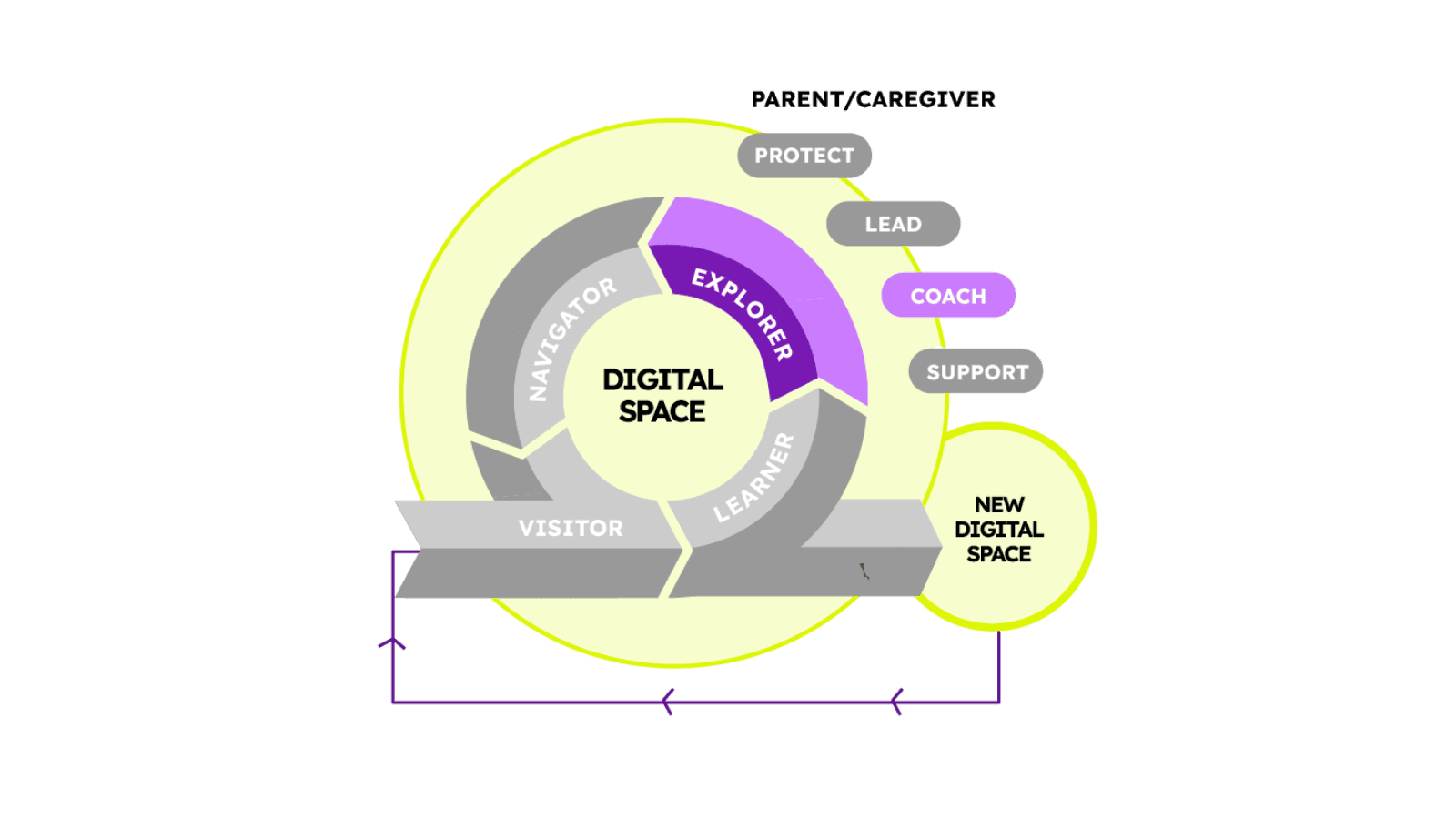
As your child's online experiences evolve, so too does your approach to protecting and supporting them.
Where are you?
Guardian: You are a coach and mentor, building your child's skills and confidence to think critically, reflect, make judgement calls and problem solve.
Rangatahi: Your young person is an explorer, moving in online spaces with increasing autonomy and curiosity.
Your rangatahi may be in a number of online spaces to connect with peers, join group chats, follow influencers, and express themselves and their identity. They may start seeking more freedom to choose new apps, games and social spaces, but they still need your guidance and safeguarding.
Some young people feel confident using technology because they’ve grown up around it and feel it is second nature to be online, but that confidence may not extend to how to navigate situations when something happens or something goes wrong. As independence grows, so does exposure to more complex digital pressures and risks of online harm.
Instead of shielding and supervising them, your role shifts towards coaching and conversation become more important than ever. Coaching isn’t one way, it’s about walking alongside - asking questions, sharing reflections, listening, learning together, and building trust that lasts longer than any app setting. Supporting rangatahi as they explore online means helping them recognise risk, applying critical thinking, and knowing when to seek help.
When your rangatahi shows you a new app or game, it’s a chance to model curiosity, humility, and shared problem-solving as you learn more about it, why they like it, how they use it, and how they can set it up to stay safe. They still need your presence, perspective, and care to help them explore online spaces more autonomously, safely and responsibly.
CORE HABIT
Pause, Think, Talk
This habit encourages self-awareness before action, helping rangatahi reflect on how choices online affect themselves and others and keeping communication open if things get tricky.
How to explain it:
“Before you post, share, comment, or respond online…”
Pause and take a breath before reacting
Think about whether it's true, kind, and something you’d say in person?How might it affect others or your reputation?
Talk to someone you trust if you’re unsure or something doesn’t feel right
Top tips for whānau:
- Discuss real-life “what if” situations like peer pressure, misinformation or cyberbullying and explore what they might do, or what advice they might give a friend in those situations
- Use everyday events (news stories, online trends) as conversation starters
- Model positive online engagement yourself
What to know
Common online experiences include getting their own phone, using social media, messaging, watching influencers and short-form content, engaging with online communities, gaming, and exploring self-expression online.
Opportunities:
- Developing creativity and communication skills through content creation
- Building friendships and connection through shared online interests
- Learning to manage online social dynamics
- Exploring passions, hobbies, and learning opportunities
- Practising decision-making, empathy, and critical thinking in digital spaces
- Using online tools to collaborate at school and for future career readiness
- Exploring independence and developing judgment
Risks and challenges:
- Peer pressure, body image, or anxiety related to comparison and ‘likes’
- Exposure to harmful content (violence, pornography, self-harm, extremism)
- Cyberbullying, exclusion, or difficult navigating social dynamics online
- Oversharing personal information
- Unwanted contact or grooming
- Difficulty managing time, rest, and emotional balance
This stage isn’t about perfect control, it’s about connection, trust, and calm responses when things go wrong.
Ways to engage
- Ask and listen - little and often
- Use the Kōrero Cards to explore your young person's online experiences and perspectives
- Co-view and learn together
- Encourage your rangatahi to show you the apps, games, influencers or content creators they follow and talk about what appeals to them
- Practice spotting fake news together
- Visit Your News Bulletin together to learn about fact checking and misinformation
- Check in on online wellbeing
- Use the Wellbeing Wheel and Supporting Online Wellbeing resources together to reflect on whether online activities are supporting or detracting from the overall wellbeing of you, your young person and your whānau
- Share your own digital experiences
- Talk about the challenges, learnings and benefits you experience from being online to help make conversations flow two-ways
Involve the whānau
Digital parenting works best when expectations are consistent across homes and generations.
Siblings
Encourage older teens to share learning moments with younger whānau members
Grandparents / extended whānau
Talk together about privacy, respect, and how whānau share images online
School and community whānau
Stay connected about online topics with teachers, counsellors, sports coaches, church leaders and community role-models - they’re all part of the digital support team

Top 5 Tips
1. Develop a ‘first phone’ plan
Create a simple family plan before your child gets their first phone or device. Include guidelines like when and where devices can be used, how to handle updates and passwords, and what happens if things go wrong. Revisit it regularly as they grow and their needs change.
2. Get hands on with the apps
Ask your rangatahi to show you the apps and games they use most often. Download the apps yourself and get to know how they work, what the features and functions are. Getting to grips with apps, games and platforms first hand is the best way for you to decide what’s OK or not OK for your young person.
3. Set up security together
Look together at age ratings, and safety settings such as how to block, mute and report. Sit down and explore privacy, chat, and location settings on the apps and games they use. Explain what each feature does and why it matters and encourage them to take the lead to build confidence and digital skills. Once the app is set up and in use, continue to check in and ask what they enjoy and what feels uncomfortable or confusing.
4. Talk about the tricky stuff
Be open about online risks. Trust, connection and communication are an essential and powerful online safety tool and can be strengthened through tackling tricky topics openly and honestly. It may feel daunting, but talking about exposure to pornography, body ideals, having a nude shared online or sexting pressures shows that no question is off limits. Mistakes can happen, content can be seen accidentally, and lapses in judgement may occur, so it’s important to normalise these conversations and discuss the options for getting help if something goes wrong online.
5. Keep balance in focus
Screentime may be a common topic of debate in the home as more apps, platforms and games are introduced, contact with friends is facilitated via chat groups and homework requirements dictate online research or laptop time. Encourage the whole whānau to take a pulse check on their screentime and break it down into how much relates to work or learning, social media, news and entertainment, gaming, hobbies, contact and connection, life admin and so on. Reflect together on whether the balance of online time feels right, or if there’s an opportunity to re-set.
Coaching isn’t one-way - it’s about learning together. When your rangatahi shows you something new, it’s a chance to practise curiosity and connection
What's next?
As your rangatahi becomes more independent, they’ll start shaping their own digital world - creating, collaborating, and connecting with others online.
Your role shifts again, from Coach to Supporter, as they take leadership in their digital spaces, and even then they’ll still need your kōrero, calm presence, and trust.
Focus on trust and conversation over control. The real safety tools are empathy, listening, and letting your rangatahi know that they can come to you without fear of punishment.

Signs your rangatahi might be ready for the next stage
These indicators aren’t milestones - they’re patterns of readiness. Children move forward and back depending on the app, their confidence, and what’s happening in life. Use these signs as conversation prompts, not assessments - to guide where your whānau puts focus next.
- They demonstrate consistent reflection and can identify what feels safe vs. uncomfortable online
- They show emotional insight, for example “that post made me feel left out - I took a break"
- They initiate conversations about their online life or are open to talking about tricky topics
- They self-correct after mistakes, for example blocking, reporting, or apologising without being told
- They’re able to support peers online and show leadership or compassion in digital spaces
- They seek privacy and autonomy, but still welcome guidance and discussion
When your young person consistently shows reflection, empathy, and accountability, you can consider moving into the Support phase - stepping back but staying available as a trusted advisor.
Digital independence grows through trust and reflection, not rules alone. When you respond with calm and curiosity instead of fear or panic, you build a foundation of openness that carries through every online challenge.
Each phase of your digital guardian journey (Protect, Lead, Coach, Support) is connected. Caregivers and whānau will move between stages often depending on context, confidence, and new experiences.
What matters most isn’t which level you’re in, but how you stay connected, curious, and kind along the way.
Contact Netsafe
If you or a child in your care experiences online harm or needs advice, Netsafe is here to help.
Contact us for free, confidential, and non-judgmental advice and support.