
 Back to all articles
Before “For You” feels normal: helping young people understand personalised feeds
24 April 2026
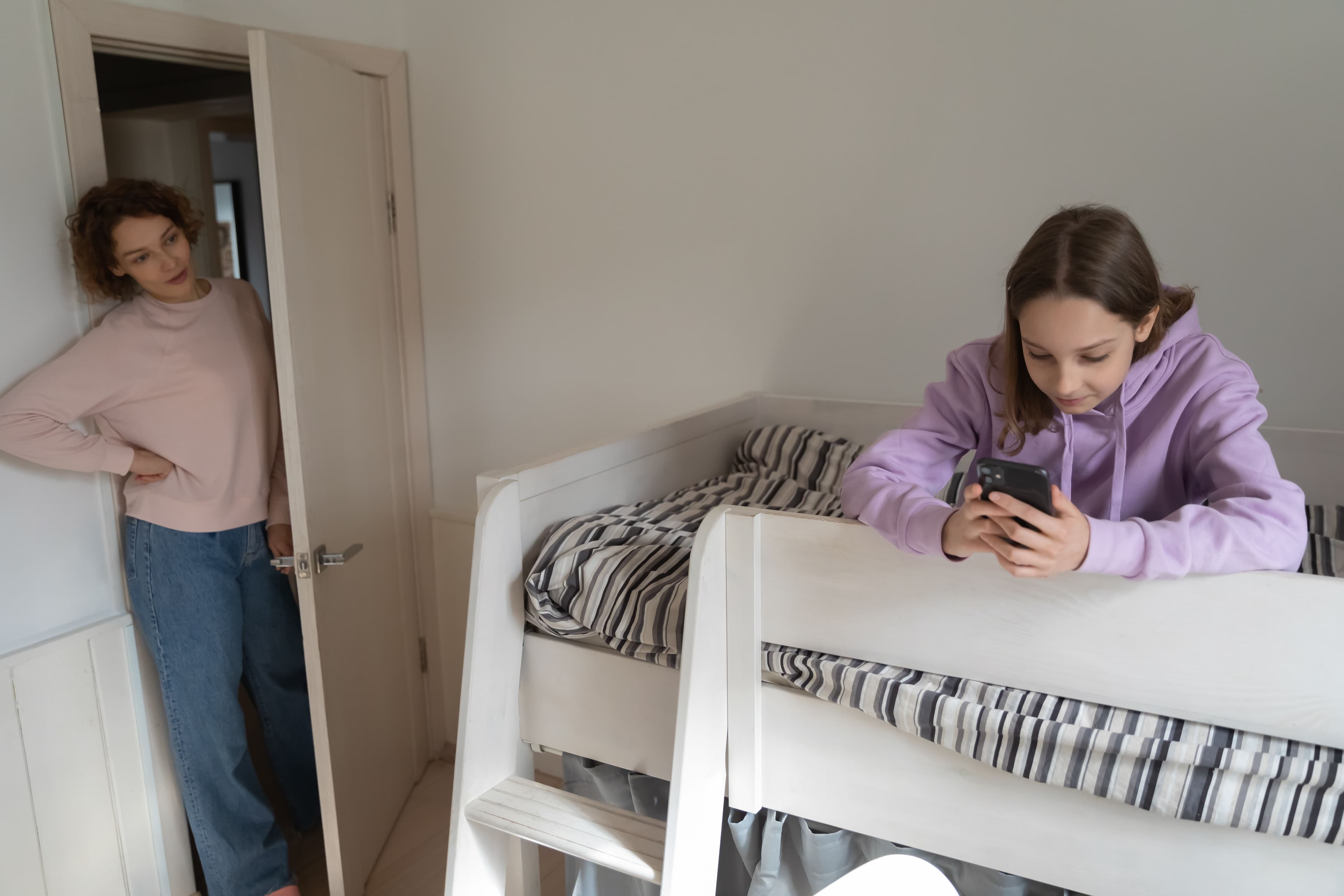
Personalised feeds can feel exciting when a young person first encounters them. This article focuses on social media-style feeds, such as For You, Explore, Reels, Shorts, suggested posts or other recommended content. You do not need to understand every algorithm, what matters most is helping your young person recognise that personalised feeds are biased systems, not neutral windows into the world.

Personalised feeds can feel exciting when a young person first encounters them. They might open an app and see videos, posts, creators, jokes, trends or advice that seem to match their interests almost straight away.
If your young person’s feed suddenly fills with the same types of videos, topics or creators, that is their personalised feed in action. For them, it can feel like the app “just gets them” — but that feeling is shaped by data and patterns, not by the app knowing what is best for them.
That can be fun and useful. It can also be powerful. A “For You” style feed is shaped by a social media algorithm that learns what keeps someone watching, reacting or coming back. Before that starts to feel like a normal part of being online, it helps to talk with your young person about what the feed is doing, how it learns, and why not everything that appears is something they chose.
This is not only a screen time issue. Two young people can spend the same amount of time on an app and have very different experiences, depending on what their feeds are showing them.
Start before there is a problem
The best time to talk about a personalised feed is not after something has gone wrong. It is before the feed becomes familiar, private or hard to question.
You might raise it when your young person is about to use a new app, starts watching short videos, talks about creators or trends, or begins spending more time in social media-style spaces.
You could say:
“Before you use this more, let’s talk about how the feed works.”
Or:
“This kind of app learns what keeps you watching. That can be useful, but it’s worth knowing what it is trying to do.”
This keeps the conversation practical rather than scary. The message is not “this is bad.” The message is “this is designed.”
Explain that “For You” does not mean “best for you”
A useful first idea is simple:
“For You” means the platform thinks this might hold your attention. It does not always mean the content is good for you, true, healthy, balanced or what everyone else is seeing.
That distinction can help young people understand personalised feeds more clearly. A feed might show something because it is funny, popular, shocking, emotional, controversial, attractive or hard to look away from. The system is not making a wellbeing decision. It is predicting what might keep the person engaged.
You might say:
“The feed is not a friend choosing what is best for you. It is a system trying to work out what will keep you watching.”
This helps separate the young person from the content. If something strange, upsetting or intense appears, it does not mean they asked for it or did something wrong.
Show how the feed learns from attention
When a young person first uses a personalised feed, they may not realise how quickly small actions can shape what comes next.
Pausing on a video, watching something twice, liking a post, saving it, following a creator, searching for a topic or reading comments can all send signals. Sometimes even curiosity can be enough.
This is how a young person can be pulled into a content rabbit hole without meaning to. They may pause because something is funny, shocking, confusing or worrying, and the feed may treat that attention as a reason to show more.
You might explain it like this:
“The feed pays attention to what you stop on, not just what you like.”
That is an important difference. A young person may not agree with a post, want more of a topic, or feel good after seeing it, but the system may still treat their attention as a signal.
A useful question to ask early is:
“What do you think this app is learning about you so far?”
This turns the first experience into a learning moment, rather than waiting until the feed feels stuck.
Help them question what keeps repeating
When something keeps appearing, it can start to feel bigger than it really is. A young person may begin to think:
- everyone is watching this
- everyone thinks this way
- everyone looks like this
- everyone wants this
- this must be important
- this must be normal
Sometimes that may be true. Other times, the content is being pushed because the system thinks it will get attention. Over time, this can create an echo chamber, where one set of ideas, looks, jokes, products or opinions appears more common than it really is.
You could say:
“If something keeps showing up, it does not always mean everyone is seeing it. It might just mean the app thinks you will keep watching.”
This idea is useful across many topics: appearance, fitness, relationships, money, popularity, humour, politics, hate, risky behaviour, online influence, or trends that make something seem more common than it is.
The goal is not for your young person to distrust everything they see. It is to help them ask better questions:
- “Is this actually popular, or just being shown to me a lot?”
- “Is this helpful, or is it trying to get a reaction?”
- “Does this show different views, or mostly more of the same?”
- “How do I feel after seeing a lot of this?”
Agree on a first-week check-in
A simple check-in after the first few uses can help your young person notice patterns early.
You might say:
“After you’ve used it a few times, let’s check what it seems to be showing you.”
Keep it light. You are not asking to inspect everything. You are helping them reflect.
Try asking:
- “What did it get right?”
- “What was funny, useful or interesting?”
- “What kept repeating?”
- “Was there anything weird, intense or hard to stop watching?”
- “Did anything make you feel pressured, left out or uncomfortable?”
- “What would you want less of?”
- “What would you want more of?”
If your young person notices something they do not want more of, start small. They might take a break and notice whether they feel different, avoid engaging further with one topic, look for where the app lets them hide or reduce content, or search for something they genuinely want more of.
You could say:
“Let’s try one change and see if the feed feels different next time.”
That keeps the focus on learning and control, not punishment.
Make it safe to talk about what shows up
Young people may feel embarrassed, worried or defensive about what appears in their feed, especially if they think an adult will blame them, ban the app or assume they searched for it.
It helps to say early:
“You are not in trouble for what shows up. If something feels off, you can tell me.”
You can also be clear about the kinds of content you want them to bring to you:
“If you see something that feels scary, sexual, hateful, violent, confusing, extreme, gross or just too much, I want you to be able to tell me. We can work out what to do together.”
Sometimes a personalised feed becomes intense quickly. It may be worth leaning in more if your young person seems upset, anxious, angry or low after using it, keeps seeing one topic that feels hard to avoid, starts comparing themselves more harshly, feels pressure to buy or change something, or talks as if “everyone” believes, does or looks a certain way.
Start with care, not accusation.
You might say:
“I’ve noticed this seems to be affecting you. I’m not angry. I just want to understand what has been showing up.”
Or:
“If the feed is giving you more of something that feels too much, we can slow it down and work through it together.”
Growing awareness together
Preparing your young person for personalised feeds is not about making them suspicious of everything online. It is about helping them build judgement before the feed becomes invisible.
A useful family message could be:
“Notice what keeps showing up. Notice how it makes you feel. Ask whether it is helping you, pressuring you, or just trying to keep your attention.”
Your young person will not always know why something appears in their feed, and neither will you. That is okay. You can still help them pause, notice patterns and ask good questions.
The aim is not to stand over every scroll. It is to prepare your young person to recognise when a feed is shaping what they see, want, believe or feel.
When they understand that “For You” does not always mean “best for you,” they are better placed to enjoy what is useful, question what feels off, and come to you when something becomes too much.